
Growth Architecture is the system behind how your company gets seen, understood, sold, tracked, and scaled.

THE GROWTH ARCHITECTURE FRAMEWORK
Most companies do not need more random marketing. They need the architecture behind growth to finally connect.
Sarah Fuller Growth Architecture helps founders connect brand, website, CRM, AI workflows, lead capture, sales enablement, and revenue operations into one cleaner system for growth.

THE SHIFT
Most companies do not have
a growth problem.
They have an architecture problem.
Their brand, website, CRM, content, AI tools, lead capture, follow-up, sales enablement, and revenue processes are not connected.
That is why more activity does not fix the mess.
The issue is not that the business lacks potential.
The issue is that the systems behind growth were never built to work together.
More activity does not fix broken architecture.

WHY THE USUAL FIXES FALL SHORT
A new website does not fix unclear positioning.
A CRM cleanup does not fix weak lead capture.
AI tools do not fix broken workflows.
More content does not fix a disconnected sales process.
A prettier brand does not fix invisible revenue operations.
When the architecture is disconnected, every fix becomes temporary.
The business keeps adding tools, pages, campaigns, meetings, content, and reports.
But the system still does not tell one clear story.
WHAT IT CONNECTS
Growth Architecture connects the strategic and operational systems behind growth.
It determines how the company is positioned, how the website explains the business, how prospects convert, how leads are captured, how the CRM tracks movement, how follow-up happens, how AI supports execution, how sales assets support revenue, and how leadership sees what is working.
When these pieces are disconnected, growth becomes harder than it should be.
When they are connected, the business becomes easier to understand, easier to sell, easier to track, and easier to scale.
Growth Architecture Connects
Brand positioning
Website copy
Lead capture
Follow-up systems
AI workflows
Reporting

Website strategy
User journey
CRM structure
Sales enablement
Content systems
Revenue visibility
THE DEFINITION
Growth Architecture is the strategy, structure,
messaging, systems, and execution layer
that makes growth easier to see, sell, track, and scale.
It is the operating system behind how a company moves from attention to conversion,
from lead capture to follow-up, from CRM data to revenue visibility,
and from scattered execution to strategic growth.
THE SYMPTOMS
The mess usually shows up in more than one place.
Founders often feel the problem before they can name it.
The company is growing, but everything behind growth feels harder than it should.

The website no longer reflects the level of company you have become.
The brand sounds generic, outdated, or unclear.
The CRM is full of information, but not real visibility.
Leads come in, but follow-up is inconsistent.
Sales and marketing are not working from the same story.
AI tools are being tested, but not operationalized.
Events and content create activity, but not clear revenue movement.
Leadership cannot see what is working.
The founder is still manually connecting work the system should make visible.
The team is busy, but the architecture is not clean.
THE FRAMEWORK
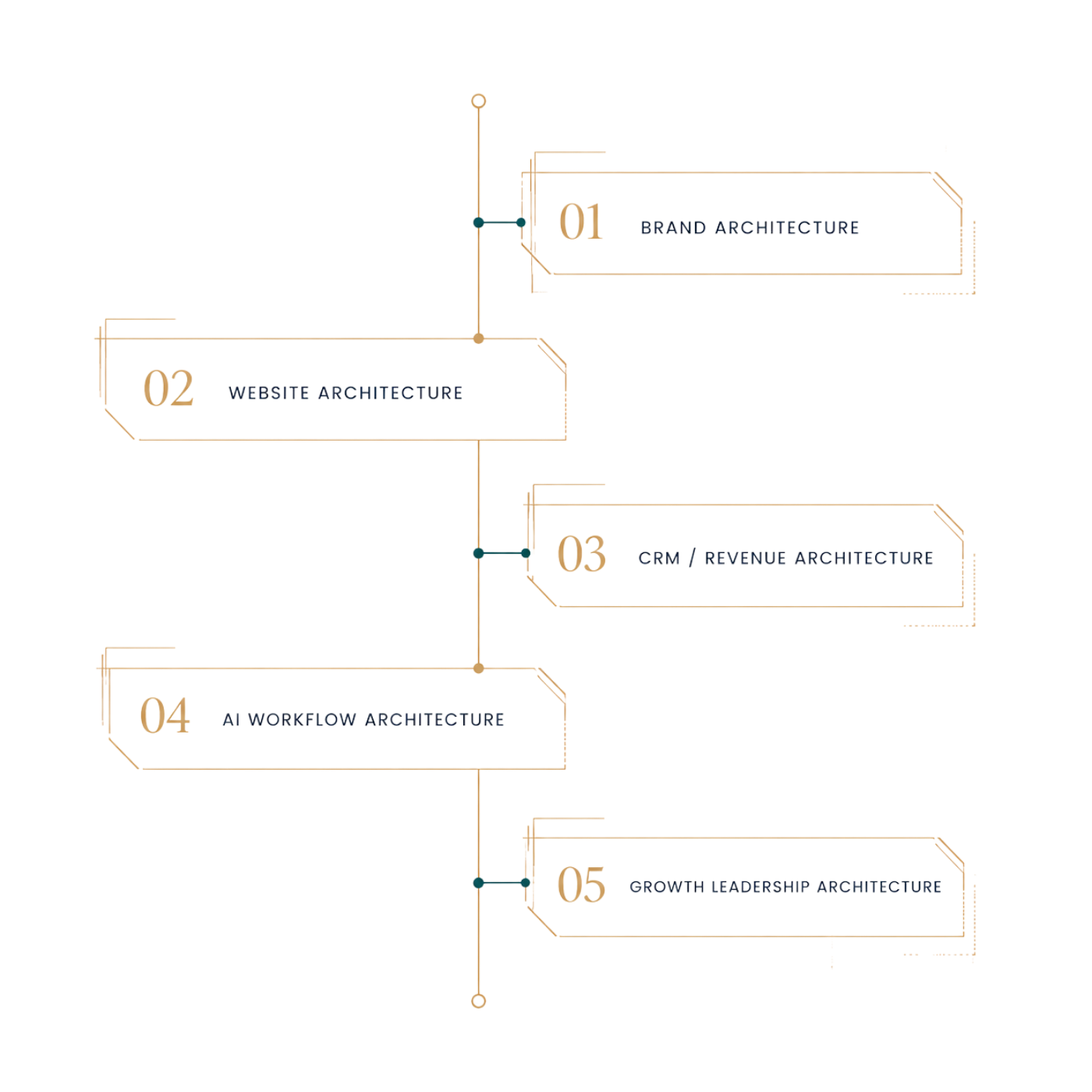
The five layers of Growth Architecture.
Growth Architecture looks at the full system, not one isolated symptom.
Sarah’s framework connects five layers:
01
Brand Architecture
03
CRM / Revenue Architecture
05
02
Website Architecture
04
AI Workflow Architecture

Growth Leadership Architecture
Each layer affects the others. When one is unclear, the entire system gets heavier.
LAYER 01
Brand Architecture makes the company easier to understand and trust.
If the brand is unclear, every growth effort becomes harder.
The website has to work harder.
The sales team has to explain more.
The CRM captures leads without context.
The founder keeps repeating the same story in different ways.
Brand Architecture clarifies what the company sells, who it is for, why it matters, how it should sound, and how the market should understand it.

01
AUDIENCE

BRAND
ARCHITECTURE
Messaging
Offer structure
Buyer clarity
OFFER

VOICE
YOUR CORE PROPOSITION
TRUST
Brand Architecture includes:
Positioning
Founder credibility
Positioning
Messaging
Offer structure
Buyer clarity
LAYER 02
Website Architecture turns attention into action.
A website is not just a digital brochure.
It is the place where positioning, buyer understanding, credibility, conversion, lead capture, SEO, and AI-search readiness have to work together.
Website Architecture defines what each page needs to do, how the buyer should move, what the copy needs to clarify, where CTAs belong, what forms should capture, and how the site supports both human visitors and search systems.
02
WEBSITE
ARCHITECTURE

ENTRY
UNDERSTANDING
ACTION
Website Architecture includes:
Page strategy
Website copy
Buyer journey
CTA structure
Lead capture
Form strategy
SEO structure
AIO / AI search readiness
Internal linking
Conversion paths
LAYER 03
CRM | Revenue Architecture makes growth visible.
The CRM is where growth either becomes visible or disappears.
A website can capture the lead. The CRM determines whether the business can see it, follow up, and turn it into revenue.
Your CRM should not be a digital junk drawer.
It should show how leads enter, how opportunities move, what needs follow-up, where revenue is stuck, and what leadership needs to see.
The platforms differ, but the architecture principles are consistent: clean data, clear pipelines, useful fields, visible follow-up, accurate stages, and reporting leadership can trust.
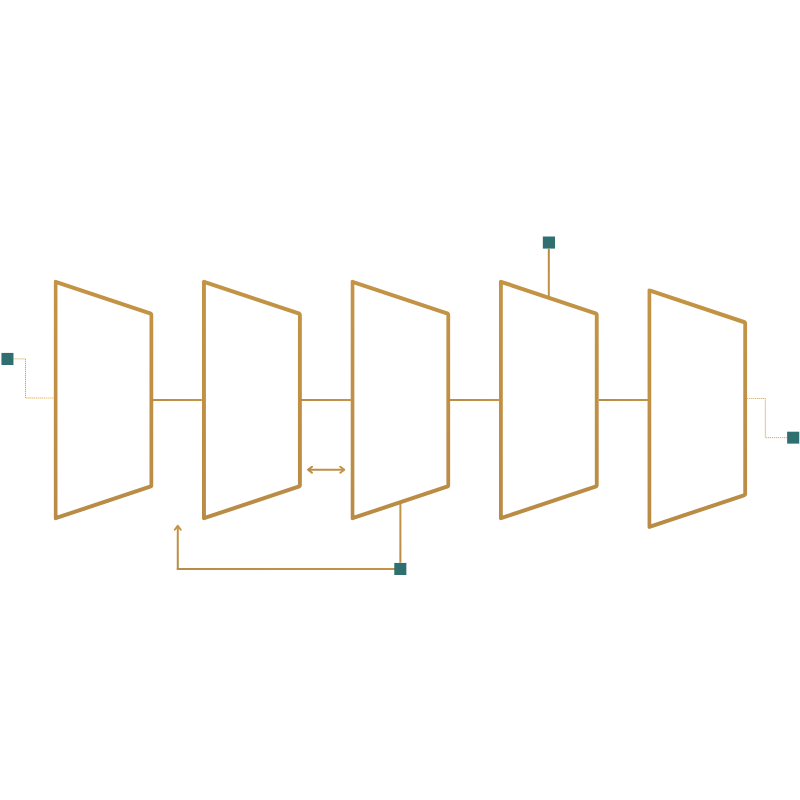
03
CRM | REVENUE
ARCHITECTURE
MOVEMENT
ENTRY
REPORTING
FOLLOW-UP
REVENUE
CRM | Revenue Architecture includes:
Pipeline structure
Stages and deal flow
Contact and organization structure
Custom fields
Lead source visibility
Follow-up systems
Activity tracking
Sales process clarity
Reporting workflows
Revenue operations visibility
LAYER 04
AI Workflow Architecture puts AI inside the system, not outside of it.
AI belongs inside the growth architecture — not scattered across random tools, prompts, and experiments.
AI is not the strategy.
AI strengthens the system when the architecture is clear.
Sarah helps founders operationalize AI inside the systems that actually drive growth: brand, website, CRM, lead capture, follow-up, sales enablement, content, reporting, research, and revenue visibility.
04
INPUT
REVIEW
AI Workflow Architecture may support:
AI WORKFLOW
ARCHITECTURE
ASSISTED WORKFLOW
OUTPUT
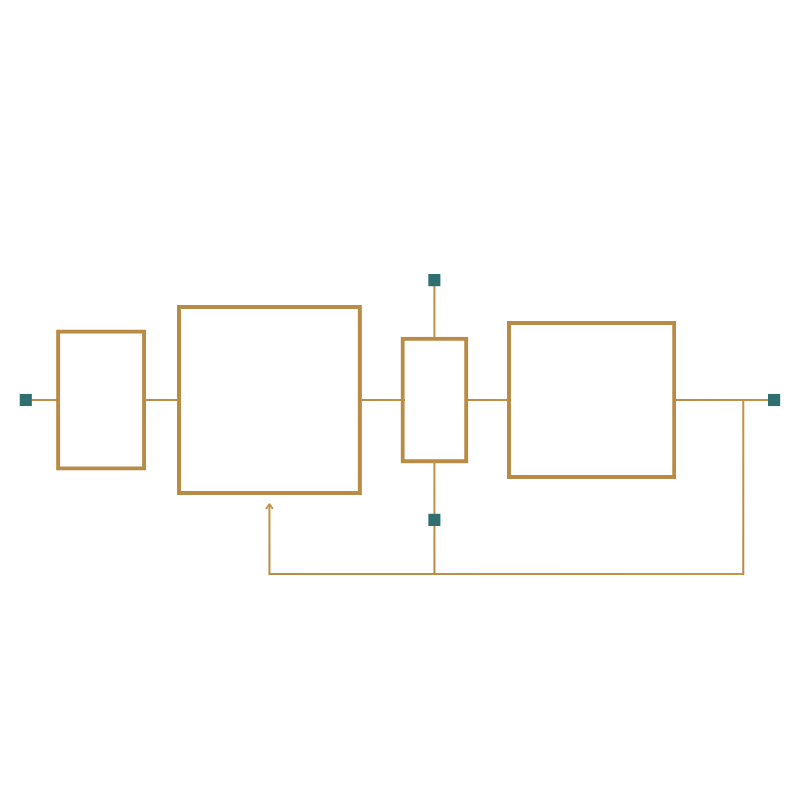
INPUT
REVIEW
ASSISTED WORKFLOW
FEEDBACK
OUTPUT
FEEDBACK
Content workflows
Sales enablement
Lead follow-up
Research
Reporting support
Internal documentation
Website and AIO structure
CRM visibility
Repeatable prompt systems
Practical no-code or low-code workflow opportunities
This is not custom AI software development. This is practical AI workflow architecture for companies that need their growth systems to work together.
LAYER 05
Growth Leadership Architecture keeps the system from becoming scattered again.
Founders often become the glue holding the growth system together.
They remember the follow-up.
They explain the offer.
They correct the messaging.
They chase the updates.
They ask for the report.
They connect the work manually.
Growth Leadership Architecture creates the strategic operating layer that helps founders and leadership teams prioritize what matters, align the work, sequence execution, and see what is actually happening.
05
GROWTH LEADERSHIP
ARCHITECTURE
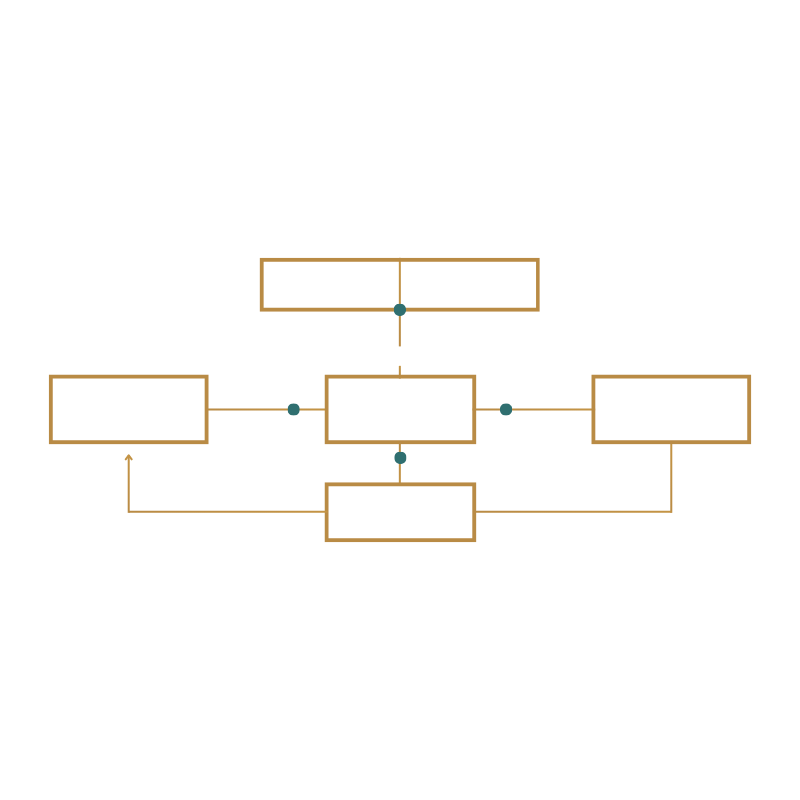
PRIORITIES
VISIBILITY
ALIGNMENT
EXECUTION
REVIEW
VISIBILITY
Growth Architecture includes:
Strategic prioritization
Offer and growth sequencing
Cross-functional alignment
Campaign and content direction
Sales and marketing coordination
Executive visibility
Reporting review
Decision support
Implementation planning
Ongoing growth system leadership
ALIGNMENT
EXECUTION
REVIEW
PRIORITIES
THE OUTCOME
Growth gets cleaner when the architecture connects.
When the system is disconnected, every part of growth asks the founder to compensate.
When the architecture connects, the company becomes easier to understand, easier to operate, and easier to scale.
Before Growth Architecture

Messaging is inconsistent.
The website is underperforming.
Leads disappear after the form.
CRM data is incomplete or confusing.
AI tools are scattered.
Sales assets are not aligned.
Reporting does not tell the full story.
The founder is manually connecting everything.

After Growth Architecture


Positioning is clearer.
The website supports the buyer journey.
Lead capture has a path.
CRM structure supports visibility.
AI workflows support real execution.
Sales enablement connects to messaging.
Reporting becomes more useful.
The founder can see and lead the system.
PROOF
This is not theory.
Sarah has built the operating system behind growth.
Sarah rebuilt and optimized the growth infrastructure for a regional B2B technology and cybersecurity company with complex sales, events, CRM, AI content, website, and revenue operations needs.
The work included website redesign and migration, full website copywriting, SEO and AI search optimization, brand consistency, forms, icons, visuals, conversion paths, AI-focused event landing pages, thought leadership content, executive visibility, CRM and PipeDrive architecture, pipeline organization, sales enablement assets, event marketing systems, lead capture strategy, reporting workflows, revenue operations visibility, and cross-functional marketing execution.
Strategy becomes valuable when it turns into structure, copy, systems, workflows, and visibility.

Website

Strategy, structure, copy, migration, conversion paths, SEO, and AIO readiness.
CRM | Revenue
Pipedrive architecture, pipeline organization, reporting workflows, and revenue visibility.
AI + Thought Leadership
AI-focused event pages, content structure, executive visibility, and search optimization.
Sales + Events
Sales enablement assets, lead capture strategy, event marketing systems, and follow-up visibility.
Strategy becomes valuable when it turns into structure, copy, systems, workflows, and visibility.
HOW IT WORKS
Diagnose. Architect. Build. Operationalize.
Growth Architecture is not a brainstorm. It is a structured process for making the system behind growth clearer, cleaner, and easier to use.

01
Diagnose
Review the current growth system across brand, website, CRM, AI workflows, lead capture, sales enablement, content, and reporting.
02
Architect
Identify what needs to be clarified, connected, rebuilt, removed, or redesigned.
03
Build
Turn the strategy into usable copy, pages, forms, CRM structure, workflows, assets, and conversion paths.
04
Operationalize
Make the system useful for the founder, leadership team, sales function, and growth execution.
Strategy becomes valuable when it turns into structure, copy, systems, workflows, and visibility.
START HERE
Before you rebuild the website,
clean up the CRM, or add another tool, diagnose the Growth Architecture.


The Growth Architecture Audit is the paid strategic diagnostic for
founders and leadership teams who need to understand what is broken, missing, disconnected, or underbuilt across the systems behind growth.
It gives you the clarity to stop guessing and start rebuilding in the right order.
Strategy becomes valuable when it turns into structure, copy, systems, workflows, and visibility.
FAQ
Questions founders ask about Growth Architecture.
-
Growth Architecture is the strategy, structure, messaging, systems, and execution layer behind how a company is seen, understood, sold, tracked, and scaled. It connects brand, website, CRM, AI workflows, lead capture, sales enablement, and revenue operations into one clearer growth system.
-
Marketing strategy is one part of Growth Architecture. Growth Architecture looks at the full system behind growth, including positioning, website structure, CRM visibility, AI workflows, lead capture, follow-up, sales enablement, reporting, and revenue operations.
-
No. Website strategy is one layer. Growth Architecture also includes brand positioning, CRM / Revenue Architecture, AI Workflow Architecture, lead capture, follow-up systems, sales enablement, and growth leadership.
-
A website can capture the lead. The CRM determines whether the business can see it, follow up, and turn it into revenue. CRM / Revenue Architecture makes growth easier to track, manage, and understand.
-
No. AI is one part of the broader Growth Architecture. Sarah helps founders operationalize AI inside the systems that drive growth, including content, sales enablement, lead follow-up, reporting, research, and revenue visibility.
-
The first step is the Growth Architecture Audit. It is a paid strategic diagnostic that identifies what is broken, missing, disconnected, or underbuilt across the systems behind growth.
-
Growth Architecture is for founders, CEOs, and leadership teams whose companies have momentum but have outgrown the systems holding growth together.
-
Yes. When there is a fit, the Audit can lead into the Website / Brand / CRM Growth Architecture Package or a Fractional Growth Architect Retainer.
Start with the System
If growth feels harder
than it should, diagnose the architecture first.
Before you invest in more marketing, a new website, CRM cleanup, or AI tools, get clear on what the system actually needs.
Before you invest in more marketing, a new website,
CRM cleanup, or AI tools, get clear on what the system actually needs.