Why More Leads Will Not Fix a Broken Sales Process
A larger pipeline will not repair unclear stages, weak qualification, slow response, inconsistent follow-up, or a CRM no one trusts. More leads often make the underlying failure more expensive.

THE SHORT VERSION
Lead generation increases what enters the system. It does not determine what the business does with it.
__________
When qualification, ownership, follow-up, stages, and reporting are weak, more leads create more leakage, noise, and manual work.
__________
Before investing in more demand, the business should confirm that every viable lead can become visible, qualified, owned, continued, advanced, and learned from.
Revenue is not growing fast enough.
The pipeline feels thin. Sales wants more conversations. Marketing is asked to create more demand.
So the business increases activity.
More content. More campaigns. More events. More outreach. More partnerships. More paid traffic. More names entering the system.
For a short time, the pipeline may look healthier.
Then the same problems return at a larger scale.
New inquiries wait too long for a response. Poor-fit leads consume attention. Strong prospects receive inconsistent follow-up. Deals remain open without a next step. Sales and marketing disagree about quality. The CRM fills with activity while leadership remains unsure what is actually moving.
The company generated more leads.
It did not create a stronger sales process.
Lead volume can expand opportunity. It can also multiply every weakness between first interest and closed revenue.
Leads are an input not an outcome
A lead indicates that someone entered the business’s field of view.
It does not automatically indicate fit, readiness, buying authority, urgency, or a viable opportunity.
The sales process has to turn the initial signal into progressively better understanding.
Who is this?
Why are they here?
What problem are they trying to solve?
Does the business have a relevant offer?
What is the next commitment?
Who owns it?
What evidence shows the opportunity is moving?
When those questions are not built into the process, every new lead creates more interpretation work.
The team may call that work selling.
Much of it is compensation for missing architecture.
“More leads do not create a better revenue system. They reveal how well, or how poorly, the existing system handles demand.” -Sarah Fuller
A larger pipeline can make the business feel healthier than it is
Pipeline totals are persuasive.
A growing number of open deals can create confidence that revenue is coming. But the total may include early inquiries, stale opportunities, speculative values, undefined close dates, and deals that remain open because no one wants to mark them lost.
The pipeline looks large.
The buying motion inside it is weak.
This creates false reassurance:
Leadership plans around revenue that is not supported by evidence.
Sales attention is spread across too many low-probability opportunities.
Follow-up becomes reactive.
Marketing is asked for more volume without understanding what happened to the last volume.
Forecasts shift repeatedly because stages do not reflect buyer commitments.
The team mistakes pipeline size for pipeline quality.
A healthy process does not aim to keep every lead alive.
It aims to make the status of every meaningful opportunity honest.
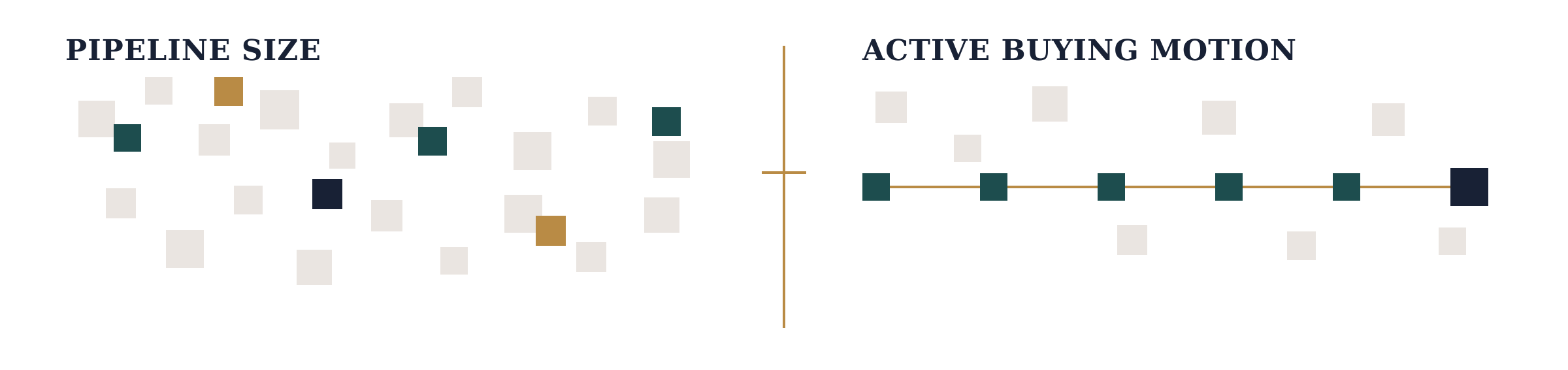
Six ways more leads make a broken process worse
01
Slow response becomes more common
If ownership is unclear or notifications are inconsistent, additional volume creates longer delays.
The highest-intent lead may receive the same treatment as a general question. A strong referral may sit beside spam in a shared inbox. A salesperson may assume someone else responded.
The business spent money to create demand and then allowed urgency to decay.
02
Weak qualification consumes more selling time
When the business has not defined fit, sales must rediscover it in every conversation.
More leads create more introductory calls with people who lack the right problem, timing, authority, investment readiness, or business conditions.
The calendar fills while the pipeline does not improve.
03
Inconsistent follow-up creates random outcomes
One salesperson follows up in two days. Another follows up twice. The founder remembers the relationship and intervenes. A promising conversation disappears because no next action was recorded.
More leads create more opportunities for inconsistency.
The result depends on individual memory instead of a shared operating standard.
04
Unclear stages inflate the pipeline
If stages represent optimism instead of evidence, new leads move into the pipeline too easily and remain too long.
“Interested,” “warm,” or “proposal sent” may describe activity without showing whether the buyer made a meaningful commitment.
More leads increase the total while making the forecast less reliable.
05
Founder dependence becomes a bottleneck
In founder-led companies, the founder often knows which opportunities matter, how the offers fit, and how to move a complicated conversation forward.
When that logic has not been built into qualification, messaging, CRM, and sales process, more leads create more demand for the founder’s interpretation.
Growth makes the bottleneck worse.
06
Lost opportunities produce less useful learning
When the team is overwhelmed, closed-lost reasons become vague or disappear entirely.
“No response.” “Not interested.” “Bad timing.”
The business cannot see whether it has a traffic problem, a fit problem, an offer problem, a proof problem, a pricing problem, a follow-up problem, or a sales-process problem.
More leads produce more loss without producing better intelligence.
A Useful Starting Point
Strengthen the process before increasing the pressure.
A Growth Architecture Audit examines how leads are captured, classified, assigned, qualified, followed up, advanced, reported, and connected to revenue. It identifies where demand is becoming invisible, delayed, misqualified, stalled, or impossible to learn from.
Requesting an Audit begins with a short fit call. The fit call confirms whether the paid Audit is appropriate; it is not a free diagnostic session. If the Audit is the right next step, I will confirm the goals, scope, timing, and payment before work begins.
The Sales Process Integrity Test
Before the business invests in more demand, every viable lead should be able to pass through six operating conditions.
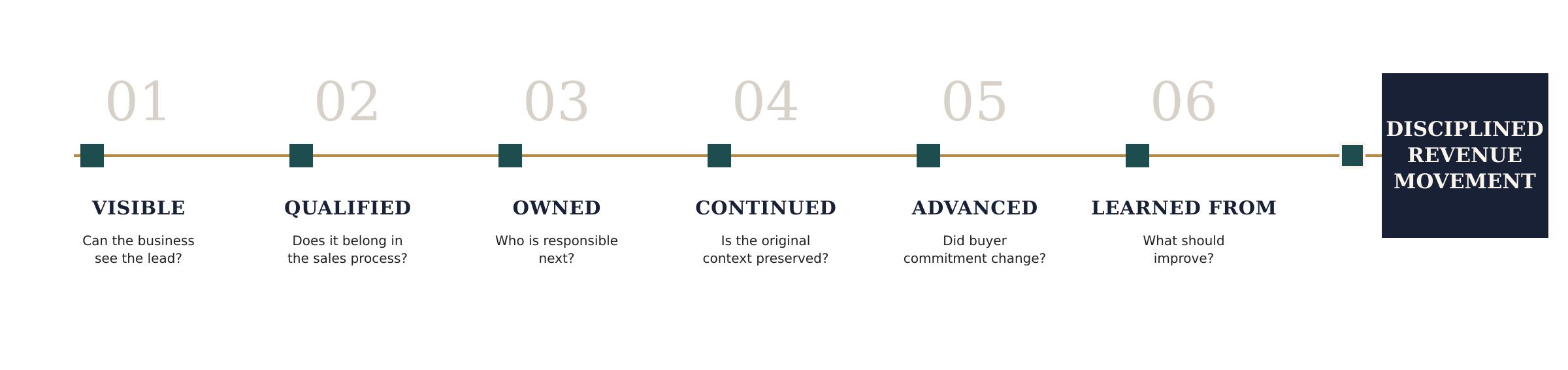
01 Visible
Can the business see every meaningful inquiry or signal?
Website forms, direct emails, event contacts, referrals, calls, social messages, partner introductions, and existing-client opportunities should enter a defined system.
Visibility does not mean forcing every contact into an active sales pipeline. It means preventing commercially relevant interest from remaining in personal inboxes, spreadsheets, event lists, or memory.
02 Qualified
Can the team determine whether the lead belongs in the sales process?
Qualification should establish fit, problem, timing, authority, investment alignment, and the next appropriate path.
The criteria should be clear enough to create consistency without reducing good judgment to a rigid score.
03 Owned
Is one person clearly responsible for the next action?
Shared visibility is useful. Shared ownership is dangerous when no one knows who must act.
The owner, response expectation, and next task should be visible. Exceptions should be surfaced rather than discovered after momentum is lost.
04 Continued
Does the next interaction preserve the context that created the lead?
The buyer should not have to repeat what they submitted. A referral should not be treated like cold outreach. An event conversation should continue the topic that created interest. A high-intent offer request should not receive a generic nurture email.
Continuity makes the process feel considered and reduces unnecessary rediscovery.
05 Advanced
Does the process define what meaningful progress looks like?
An opportunity should move because something changed in the buying process: fit was confirmed, decision access was established, scope was defined, a proposal was accepted for review, or a clear next commitment was made.
Activity supports advancement. It should not be mistaken for advancement.
06 Learned from
Can the business use the outcome to improve?
The system should record why a lead was disqualified, why an opportunity stalled or closed, which sources produced fit, which offers moved, and where follow-up or proof failed.
Every outcome should make the next lead easier to understand.
The handoff is where revenue context often disappears
The buyer experiences one relationship with the company.
Internally, that relationship may move across marketing, website forms, CRM automation, an administrator, a salesperson, the founder, delivery leadership, and finance.
Each handoff can lose context.
The source disappears. The buyer’s stated problem remains in a form notification. Notes stay in someone’s inbox. The CRM record contains a name but not the conversation. Sales asks questions the buyer already answered. The proposal reflects a different understanding from the discovery call.
A strong handoff should transfer:
Who the buyer is
How they entered
What created the interest
Which problem or offer is relevant
What has already been discussed
What was promised
What the next action is
Who owns it
When it should happen
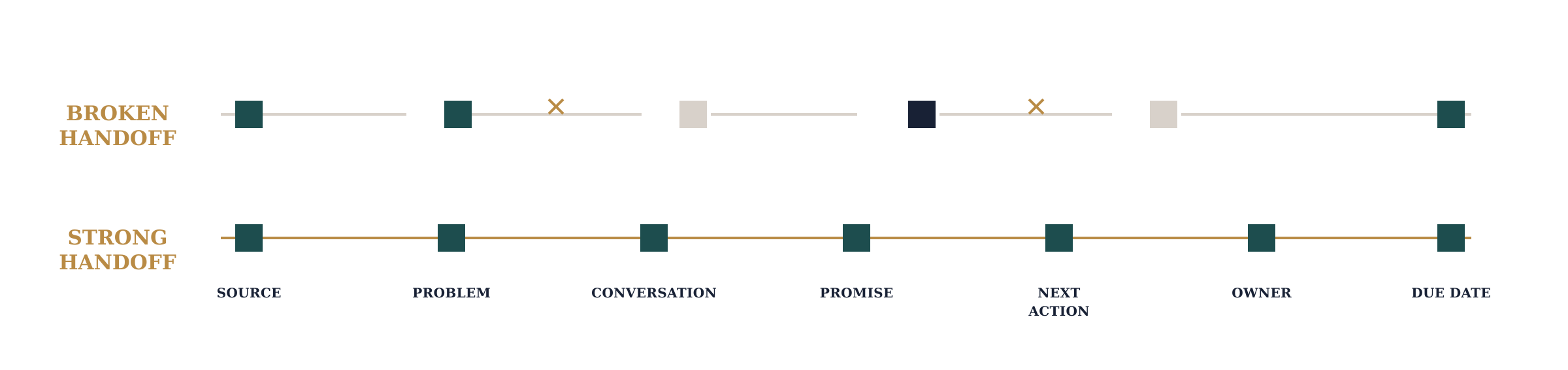
More leads create more handoffs.
If the handoff architecture is weak, scale increases the loss.
Follow-up is a system, not a reminder
Many companies treat follow-up as personal discipline.
The salesperson should remember. The founder should check in. The team should keep trying.
Reminders are part of follow-up. They are not the entire system.
A useful follow-up architecture defines:
Which situations require immediate human response
Which can be acknowledged automatically
What a useful confirmation should say
When the next action is due
How many attempts are appropriate
Which channel fits the relationship
When an opportunity should move, pause, nurture, or close
What context the next person needs
How overdue or missing action becomes visible
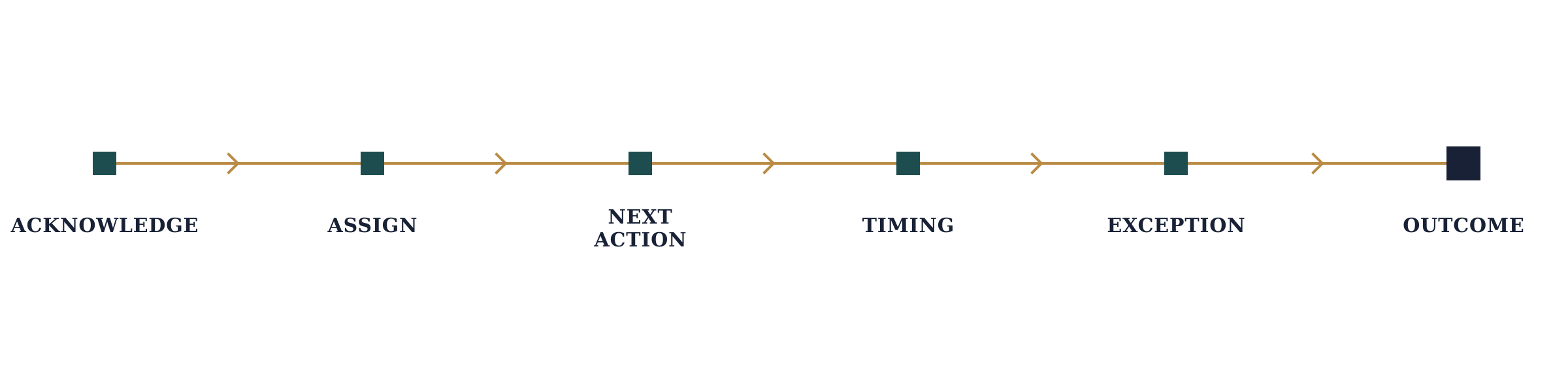
Automation can preserve standards and surface exceptions.
It should support judgment, not replace it with generic persistence.
Qualification protects both sales capacity and brand trust
Weak qualification is expensive in two directions.
It allows poor-fit leads to consume sales time.
It also allows strong-fit leads to receive an experience designed for everyone.
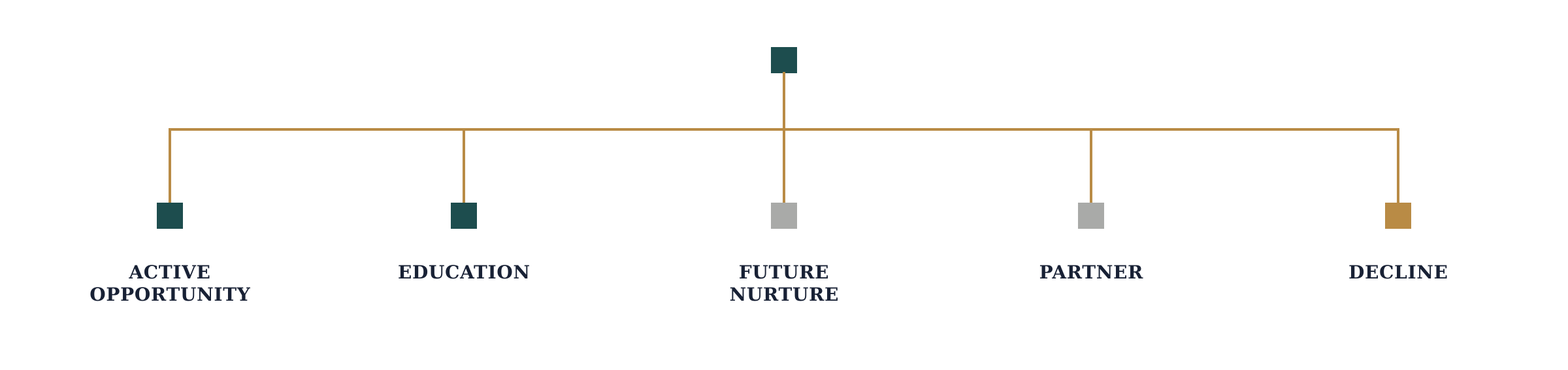
Qualification should route people appropriately.
Some inquiries belong in an active opportunity. Some need more education. Some are better suited to a smaller offer, a future nurture path, a partner, or a clear decline.
A premium business does not create trust by accepting every conversation.
It creates trust by recognizing fit and directing the next step honestly.
Sales stages should represent buyer commitments
The strongest stage definitions describe evidence—not internal enthusiasm.
Weak stage:
“Proposal sent.”
Stronger stage logic:
The buyer confirmed the problem and scope, identified the decision participants, agreed to review the proposal by a defined date, and scheduled the next conversation.
Sending a document is an activity.
Agreeing to a decision process is movement.
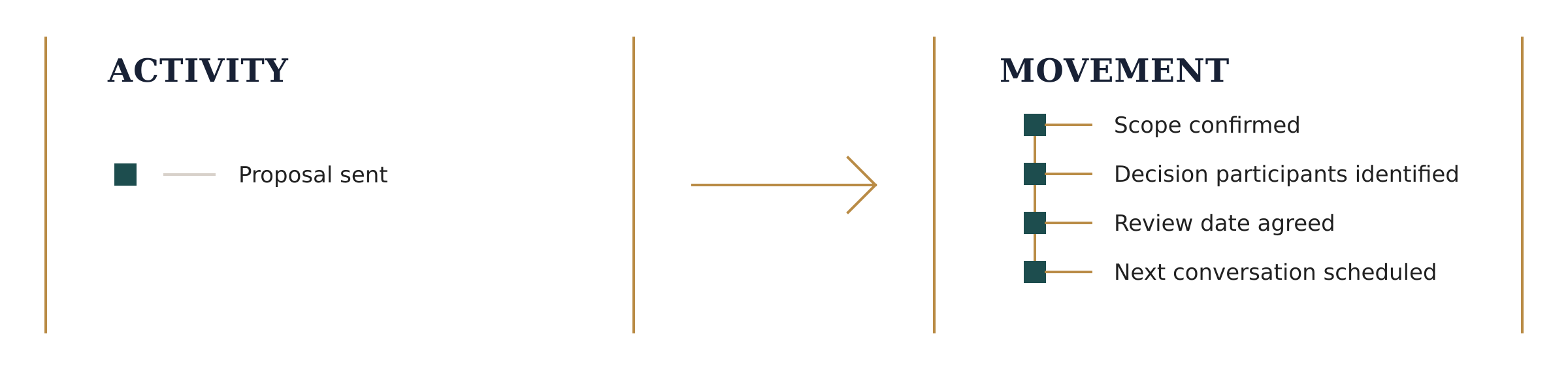
When stages reflect commitments, the CRM can show where deals are truly progressing, where they are stalled, and what action is required.
More marketing can hide a sales-process constraint
If leads are not becoming revenue, the business may assume marketing quality is weak.
Sometimes it is.
But the failure may occur after marketing did its job.
The right buyer arrived. The message created interest. The form captured intent. Then the response was late, the qualification was inconsistent, the handoff lost context, the proof did not match the objection, or the next step was never defined.
Without connected data, marketing receives the blame because the business can see the source more easily than it can see the broken process.
The system should separate:
Lead-volume problems
Lead-fit problems
Response problems
Qualification problems
Progression problems
Offer or proof problems
Follow-up problems
Reporting problems
Each requires a different decision.
What to measure before asking for more leads
Before increasing demand, leadership should understand:
Lead response time
Percentage of leads assigned correctly
Percentage receiving a defined next action
Qualification rate by source
Conversion from qualified lead to opportunity
Stage-to-stage movement
Time spent in each stage
Opportunities with no future activity
Proposal-to-decision movement
Closed-lost reasons
Revenue by source, offer, and buyer type
Where founder involvement is still required
The goal is not to create a dashboard full of metrics.
It is to identify the constraint that additional volume would amplify.
Fix throughput before scaling input
A strong sales process does not force every lead toward a sale.
It creates a reliable way to see, qualify, own, continue, advance, and learn from demand.
When that system is working, more leads can create more revenue because the business has the capacity to recognize and continue the right opportunities.
When it is not working, more leads create a larger pile of unfinished decisions.
The question is not only whether the company can generate demand.
It is whether the company can turn demand into disciplined movement without losing context, trust, or visibility along the way.
Find the constraint between lead and revenue.
The Growth Architecture Audit shows where lead capture, qualification, ownership, stages, follow-up, CRM architecture, and reporting stop working as one process and what the business should address first.

Sarah Fuller
Growth Architect
I help founder-led B2B companies connect brand, website, CRM, AI workflows, and revenue operations into a growth system the business can actually use. I diagnose the architecture, rebuild the disconnected parts, test how they work together, document the system, and establish clear ownership for what comes next.